
We assist entrepreneurs in securing financial support from public funds and in properly accounting for and utilizing various tax incentives related to their investments. When planning investments, it is important not only to identify which support programs or tax incentives are available and under what conditions but also to pay attention to eligible costs when claiming research and development (R&D) tax relief. We provide assistance, for example, to taxpayers benefiting from the R&D tax relief. Our services include identifying qualifying costs for R&D tax relief and supporting the process of segregating these costs in accounting records. We also offer tax support for accounting under the IP BOX regime and the 50% cost variant.
Proper preparation for an investment at the conceptual stage can:

Research and development activities may sound academic, but in practical business terms, they are frequently encountered.
Creative activities involving scientific research or development work, systematically undertaken to increase knowledge and apply that knowledge to create new applications. This also includes qualifying costs for the calculation of research and development tax relief.
– Development work involves acquiring, combining, shaping, and utilizing current knowledge and skills, including those related to IT tools or software, for planning production and designing and creating modified, improved, or new products, processes, or services.
– Creative activity refers to efforts focused on developing a new intellectual product (the existence of a similar solution in another entity does not preclude creative activity in this area within our company).
– Systematicity refers to conducting activities in an orderly, methodical, and planned manner. Continuous R&D work is not required; it is sufficient to undertake a single project with defined objectives, a schedule, and allocated resources.
Taxpayers often fail to realize that the R&D tax relief is a widely available tax preference that may also apply to their business. All entrepreneurs engaged in research and development activities can benefit from a deduction of 100% of eligible costs. Therefore, the R&D tax relief is a tax preference that allows a company to reduce its taxable base twice by the costs that qualify under the R&D tax relief scheme.
It is important to emphasize that to take advantage of the R&D tax relief, a company does not need to be innovative on a large scale or have a dedicated R&D department. It is sufficient for the business to introduce new products, processes, or services, or to improve existing ones.
The IP BOX is a tax preference that allows income from qualifying intellectual property rights to be taxed at a preferential rate of 5%. The condition for its application is that the qualifying intellectual property right must be created, developed, or improved by the taxpayer within the scope of their research and development activities.

This tax preference is specifically designed for entities that utilize qualifying intellectual property rights in their business activities. If you use any of the following intellectual property rights, the IP BOX is for you:
– patents,
– protective rights for utility models,
– rights from the registration of industrial designs,
– rights from the registration of topographies of integrated circuits,
– supplementary protection certificates for patents on medicinal products or plant protection products,
– rights from the registration of medicinal products and veterinary medicinal products authorized for sale,
– exclusive rights as mentioned in the Act on the Legal Protection of Plant Varieties,
– copyright to computer software.

50% tax-deductible costs for creators
This solution can complement the R&D tax relief. The result of R&D work often includes works protected by intellectual property rights. Properly structured agreements with creators allow for the simultaneous application of the R&D tax relief and the calculation of tax-deductible costs for creators at 50% of the income they earn from these sources.
The 50% tax-deductible costs can be applied by payers on behalf of “creator”
The possibility of applying 50% tax-deductible costs is not limited to employees but also includes contractors and those performing commissioned works. These rules can be particularly applied to individuals involved in creating computer programs or conducting research and development activities.
The 50% tax-deductible costs can be applied to:
The use of copyrights by creators and related rights by performers, or the disposal of these rights.
Payment to the creator for the transfer of ownership of an invention, semiconductor topography, utility model, industrial design, trademark, or ornamental design.
License fees for the transfer of the right to use an invention, semiconductor topography, utility model, industrial design, trademark, or ornamental design.
Its purpose is to reduce the burden associated with bringing a new product to market. It applies to:
introducing a new product to the market (obtaining research, expert opinions, certifications, approvals, CE marking, safety marking, marketing authorization, product lifecycle testing, and environmental technology verification systems).
The relief complements the process initiated by research and development activities. Any entity can benefit from this solution—the requirement is the development of a new product that does not yet exist on the market.

The relief allows for a deduction of 30% of the total costs of trial production and the introduction of a new product to the market from the taxable base. However, the amount of the deduction cannot exceed 10% of the income from business activities in a tax year.
Within the relief, there are two categories of qualifying costs:
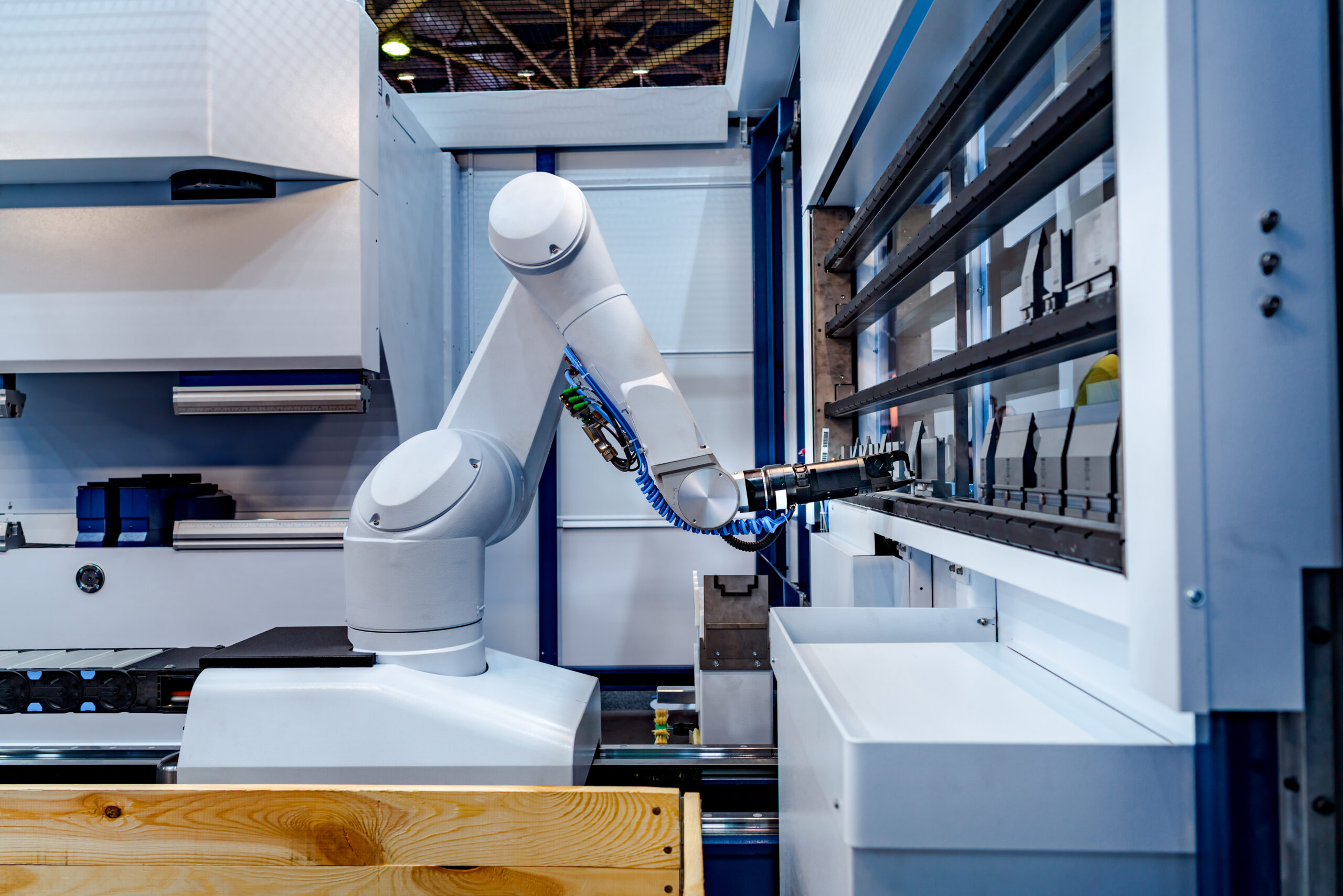
The robotization relief aims to reduce the high investment costs that need to be incurred for robotization. This will allow entrepreneurs in Poland to mechanize their facilities, thereby increasing production efficiency.
The relief provides for an additional deduction from the tax base of 50% of the costs incurred in the tax year for robotization. It is important to note that the amount of the deduction cannot exceed the income earned by the taxpayer from business activities in the tax year.
The relief is aimed at entities interested in expanding into new domestic and foreign markets. The premise is the ability to deduct expenses incurred to increase revenues from the sale of products from the tax base.

or
or
The maximum amount of the deduction can be 1 million PLN in the tax year. Eligible costs related to expansion are understood as:

